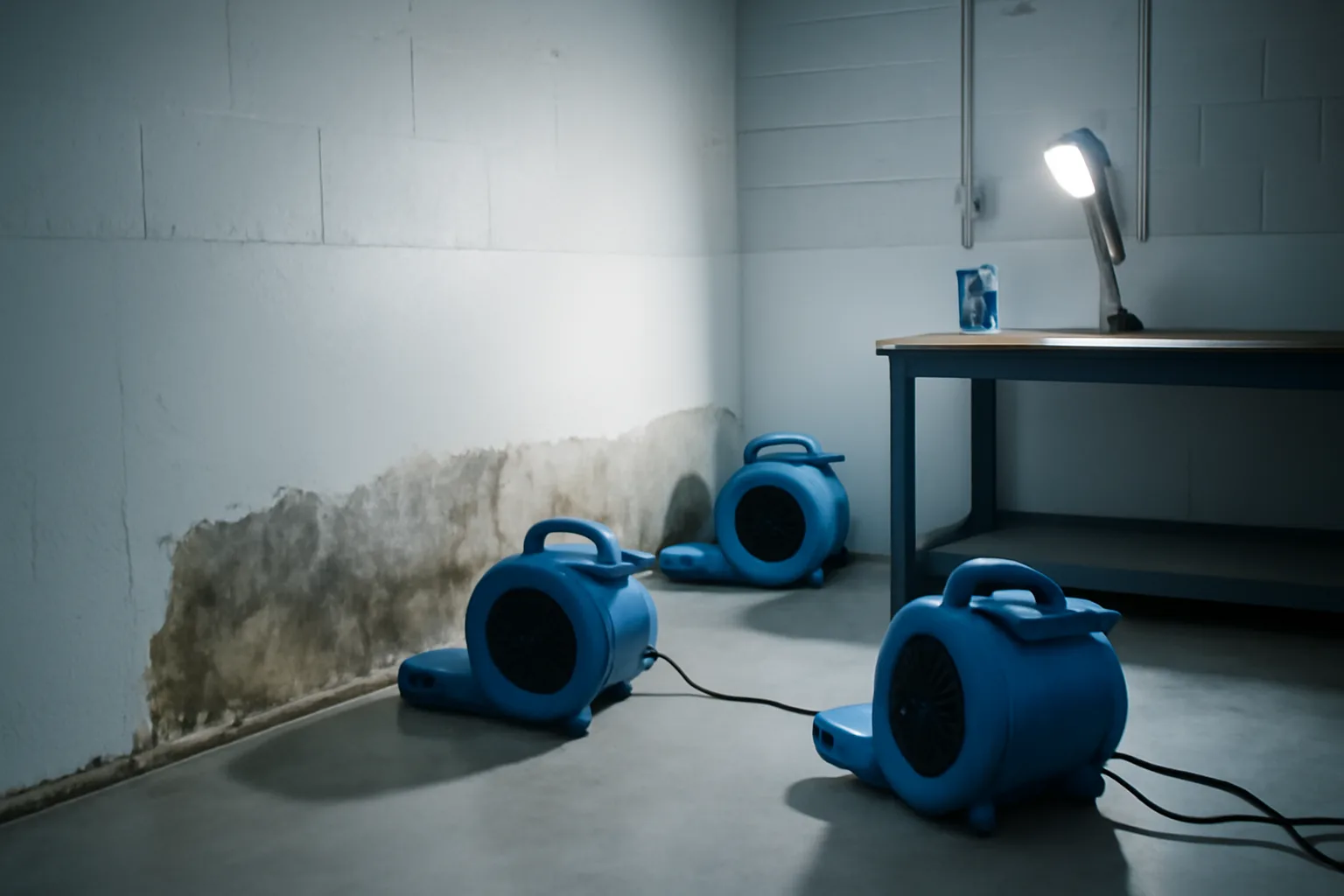
Fire damage in East Rutherford is rarely contained to where it started; heat, smoke, and water each spread on their own path through the structure. Our crew boards up what is exposed, addresses the suppression water, and runs a smoke survey reaching well past the room that burned. Drenched framing in a Bergen County winter starts growing mold fast, which is why we dry while we clean rather than after. The full extent — char, soot travel, and suppression water — is recorded and delivered as one organized packet. Call 551-231-8993 and a board-up crew is sent out the same hour.
Why The Cleanup Outlasts The Fire
Smoke travels far beyond the room that burned, settling into spaces that look untouched. Smoke molecules bond to porous materials at the molecular level, which is why air freshener and ozone sprays only mask the odor until they fade.
Our technicians deodorize the ductwork and air handler too, since a fire-affected HVAC redistributes the smell long after surfaces are clean. We log the deodorization method and the surfaces treated so the odor work is provable rather than assumed.
Why Source Removal Comes First
Masking buys a few days; the smoke molecules in porous materials outlast any scent that covers them. We treat the air handler and the runs, not just the registers, because that is where the odor reservoir actually sits.
We make the cleaning-versus-replacement call on the condition of the system, not on what is easiest to bill. Done right, the odor is gone and stays gone — no returning smell once the masking would have faded.
Why A Fire Loss Has Two Clocks — The Short Version
The water used to extinguish a fire saturates framing, drywall, and contents that the flames never touched. The water carries soot deeper into porous materials, so leaving it in place spreads the contamination further.
We dry by the numbers even on a fire loss, because a structure that reads wet is a structure that is still at risk. A fire loss dried to standard closes cleanly; one left damp reopens as mold behind the freshly cleaned walls.
The water used to extinguish a fire saturates framing, drywall, and contents that the flames never touched. That is why our fire response opens with stabilization and extraction, not just soot and odor — the water cannot wait. We dry by the numbers even on a fire loss, because a structure that reads wet is a structure that is still at risk. If the suppression water is not pulled quickly, the fire loss quietly becomes a mold loss on top of everything else.
How Residue Etches A Home — Worth Knowing
The residue a fire leaves does not just look bad — it chemically attacks surfaces every day it is left in place. The acidity means a delay of days turns a cleaning job into a refinishing job on the same surfaces.
Our crew matches the cleaning method to each material and treats the residue before it has time to set. A quick soot response is the difference between salvaging surfaces and rebuilding them.
What the fire spared, the soot can still claim, because acidic residue keeps working on surfaces over the following days. Acting in the first days is what keeps a fire loss from spreading into surfaces the flames never even reached. We address the surfaces the smoke actually reached, not just the obvious ones, and we do it quickly. Surfaces that could have been wiped clean on day one often need refinishing or replacement by the end of the week.
Saving What Can Be Saved — No Fluff
The belongings in a fire-damaged home need as much careful handling as the structure around them. The pack-out gets fragile and salvageable contents out of the work zone so they are not damaged further during restoration.
The inventory ties each item to its condition, so the adjuster can see exactly what the smoke and water reached. That way the belongings side of the claim is as clean and documented as the building side, with no loose ends.
The belongings in a fire-damaged home need as much careful handling as the structure around them. We return the cleaned contents once the structure is ready, closing the loss completely rather than partially. The inventory ties each item to its condition, so the adjuster can see exactly what the smoke and water reached. We sort the contents into salvage and loss, clean the salvage in a controlled environment, and record the rest for the claim.
Where this fits the full job
A {city} loss almost always touches more than one service — fire damage restoration often overlaps with basement flood cleanup, tarping and stabilization, mold cleanup, biohazard cleanup, post-loss reconstruction, and one crew takes on the whole job, start to finish. We cover the same way across and everywhere else across Bergen County.
If you searched for a restoration crew near you, When you want it handled, a nearby team responds, and we back every bit of it with readings. Call 551-231-8993 any hour, read What a House Fire Really Leaves Behind in East Rutherford on our blog, or head back to our East Rutherford home page to see everything we do.